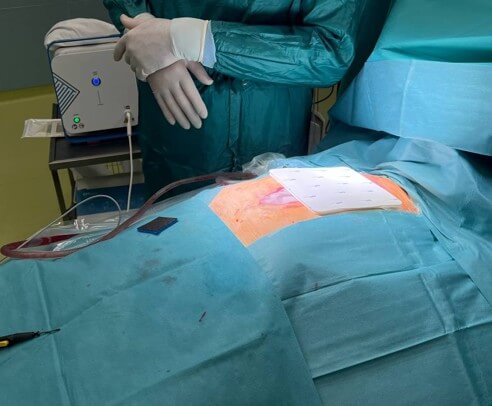
How can CPT® cold plasma be integrated into existing cardiac surgery workflows to provide targeted support for complex, secondary healing wounds? The webinar "Large-area CPT® cold plasma therapy for cardiac surgery indications – therapy optimization for cardiac surgery wound healing disorders"focused on clinical experiences from everyday care. CPT® was discussed not as a replacement, but as a complementary therapy within established treatment concepts such as debridement, irrigation/jet lavage, V.A.C. therapy, and guideline-based anti-infective treatment.
Experiences with the use of CPT® for various indications were presented, including:
- Secondary healing sternal, pre-sternal, and substernal wounds
- LVAD driveline infections
- Severe mediastinitis, even with problematic germs
- Deep groin infections, e.g., after ECMO
- Pacemaker pocket infections
- Pressure ulcers and selected viral wound findings
Observations from everyday clinical practice
The webinar described the following effects and aspects from practical experience:
- Antimicrobial effect with clinically observed reduction in bacterial load
- Promotes wound vitality and granulation, visible in some cases immediately after application
- Painless to virtually painless application, suitable for inpatient and outpatient use
- Procedural advantages, as CPT® applications and dressing changes can often be performed outside the operating room
As a relevant safety aspect, it was reported that no negative impact on VAD systems or other implants was observed in clinical use.
Practical tips for use
The speakers emphasized several practical points:
- CPT® should be integrated into the treatment concept at an early stage and in a structured manner.
- It is used in addition to surgical treatment and anti-infective therapy.
- In severe cases, initial more frequent application may be advisable.
- Even large or anatomically difficult wounds can be treated with suitable dressings.
- Plasma can be effective on deep wounds, provided there is contact with the surrounding air.
Speakers
- Prof. Dr. Markus Barten, MD
Surgical Director, Heart Failure and Transplantation Outpatient Clinic, University Heart and Vascular Center, UKE Hamburg - Volker Lauenroth
Head of VAD Coordination, Heart and Diabetes Center Bad Oeynhausen - Dr. Maximilian Vondran, MD
Senior Physician, Cardiac Surgery, University Medical Center Giessen and Marburg
Webinar recording: You can find the recording here: