

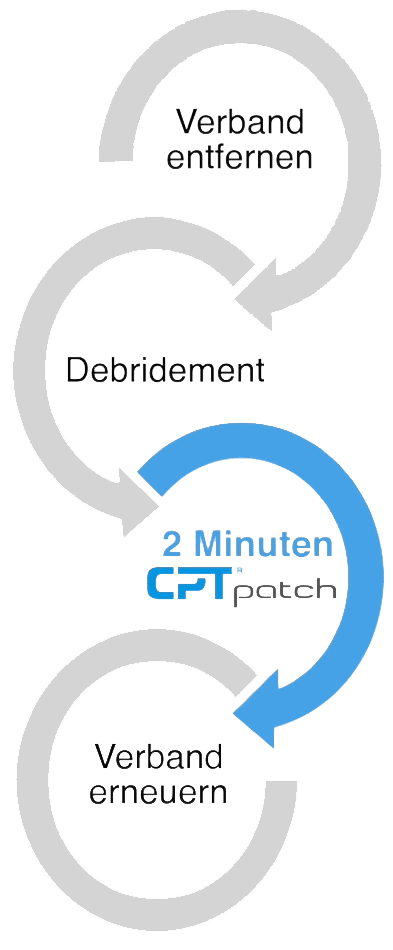
CPT® cold plasma can also be integrated into existing standard wound care protocols, for example in combination with wound dressings, compression, and other established treatments.
Following surgical or conservative debridement, CPT® cold plasma can be used to condition the cleaned wound bed, reduce the microbial load, and specifically prepare the wound for subsequent treatment.
Common challenges:
- Residual microbial contamination following debridement
- Difficulties in creating a wound bed suitable for treatment
Potential workflow benefits of debridement and CPT® cold plasma
- Support for infection control
- Stabilization and preparation of the wound bed
- Preparation for subsequent treatment steps
Best time to use this in the workflow:
Immediately after debridement, once hemostasis has been achieved.
CPT® cold plasma can be combined with autologous, allogeneic, and xenogeneic grafts, as well as with acellular and synthetic skin substitute materials. Its use may be particularly beneficial during phases in which infection control, wound bed preparation, and stable integration are the primary concerns.
Tissue grafts
- Autologous, allogeneic, and xenogeneic transplants
Common challenges:
- Early-stage infections as the leading cause of graft loss
- Subclinical contamination of the wound bed
- Biofilm formation
Potential workflow benefits of tissue grafts and CPT® cold plasma
- Reduction in revision surgeries
- Shorter storage time
- No known development of resistance
- Improved graft take rate through better infection control
Best time to use this in the workflow:
Immediately before applying the tissue or skin graft. Depending on the permeability of the graft or skin substitute—for example, in the case of porous or mesh-like structures—regular use may also be possible after application. Please contact the respective manufacturer for more information.
skin substitute
- Acellular and synthetic skin substitutes
Common challenges:
- Delayed vascularization
- Chronic inflammation
- Risk of infection during the integration phase
Potential workflow benefits of skin substitutes and CPT® cold plasma:
- Shorter time to skin coverage
- More stable integration of the skin substitute
- Promoting wound healing
- Improved infection control
Best time to use this in the workflow:
Immediately before applying the tissue or skin graft. Depending on the permeability of the graft or skin substitute—for example, in the case of porous or mesh-like structures—regular use may also be possible after application. Please contact the respective manufacturer for more information.
As a complementary step, particularly during NPWT/VAC changes, CPT® cold plasma can help condition the wound bed and control infection. This allows the therapy to be integrated into existing workflows without interrupting the process.
Common challenges:
- Infections and critical bacterial colonization
- Delayed granulation in complex wounds
Potential workflow benefits of NPWT and CPT® cold plasma
- Improved infection control
- Stabilization and preparation of the wound bed
- Promotion of granulation and wound healing
- Removal of wound exudate
Best time to use this in the workflow:
Immediately after changing the sponge. After cleaning the wound, CPT cold plasma is applied before the new sponge and pump are attached.
Following surgical debridement and prior to temporary or permanent wound coverage, CPT® cold plasma can be used as an additional, tissue-sparing treatment step to prepare the site for reconstructive procedures.
Common challenges:
- Persistent bacterial contamination following surgical debridement
- Increased risk of infection prior to reconstructive procedures
Potential workflow benefits of CPT® cold plasma in intraoperative use
- Reduction of microbial contamination and the risk of infection prior to reconstructive procedures
- Improving the healing of skin grafts or skin substitutes
- Promotion of granulation and wound healing
- Promotion of granulation and wound healing
Best time to use this in the workflow:
After surgical debridement and/or wound cleansing, and for surgical wounds prior to final wound closure.
We assist facilities in the structured integration of CPT® cold plasma into existing treatment processes—from patient selection and treatment protocols to training and implementation in daily clinical practice.


